VINTAGE COLLECTIBLE CHINA
Lefton China Tea Set: Timeless Vintage Elegance for Collectors
Each Lefton china tea set tells a story through its porcelain-crafted with the refined artistry that made mid-century collectible china so coveted among enthusiasts. From delicate violet motifs to graceful gilt-edged saucers, these vintage sets remain prized possessions for discerning collectors who value beauty rooted in heritage. Though sourced from multiple eras and styles, every Lefton piece carries a quality…
Unique Pieces Cataloged
Retailer Sources Tracked
Of Collectible Heritage
WHAT MAKES LEFTON TEA SETS DIFFERENT
Hand-Painted Artistry Sets Lefton Apart
Every Lefton china tea set begins with a painter’s brush, not a printing press. That distinction shapes everything from the depth of color to the subtle variations that make each piece unmistakably one-of-a-kind.
Brushwork Detail No Decal Can Match
Lefton artisans painted violets, roses, holly berries, and heritage florals directly onto each piece. Under close inspection, you’ll notice subtle brushstroke direction and pigment depth that transfer printing simply cannot replicate-evidence of a human hand at work on every cup.
Gilt Edges Applied by Hand
Gold trim on Lefton teacups, saucers, and teapots was painted along rims and pedestal bases rather than machine-stamped. Over time, this hand-applied gilt wears gently in unique patterns, giving vintage pieces a character that factory-fresh reproductions lack entirely.
Bone China Gives Paint a Luminous Ground
Lefton chose bone china for many of its tea sets because the translucent porcelain body lets painted colors glow rather than sit flat. Sweet violets on a pink banded base or mint greens with pink roses read with a warmth that ordinary stoneware cannot achieve.
Made in Japan Artisan Tradition
Production in Japanese ceramics workshops meant Lefton’s painters trained alongside generations of porcelain craftsmen. The Violet Chintz and Heritage Rose patterns show a finesse-delicate petal gradations, precise leaf veining-rooted in that regional expertise rather than mass-market shortcuts.
Lefton China Tea Set Collection
Discover the timeless elegance of Lefton China — hand-painted porcelain treasures from Japan cherished for their delicate florals, gold accents, and vintage mid-century charm, perfect for collectors and tea lovers alike.
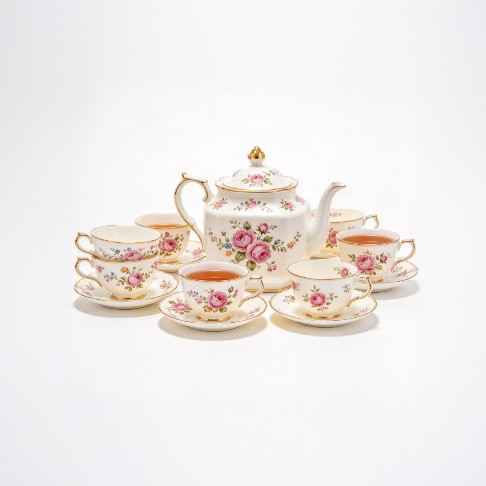
Rose Chintz Tea Set
A classic Lefton favorite featuring soft pink roses on white porcelain with gold trim accents. This hand-painted vintage set brings romantic elegance to any tea table, cherished by collectors nationwide.
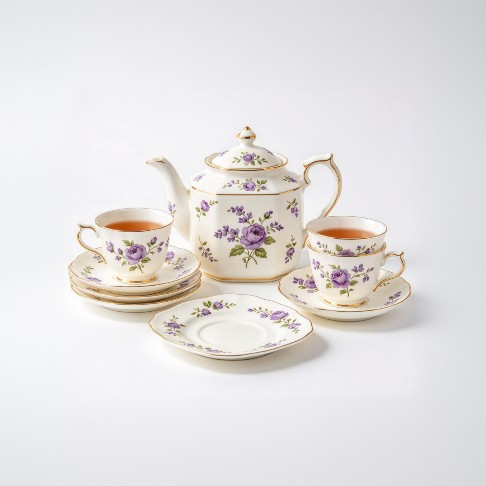
Violet Chintz Tea & Toast Set
Delicate purple violets bloom across this dainty 1950s Lefton set, complete with gold gilt detailing. A charming service for six, ideal for afternoon tea parties and nostalgic collectible displays.
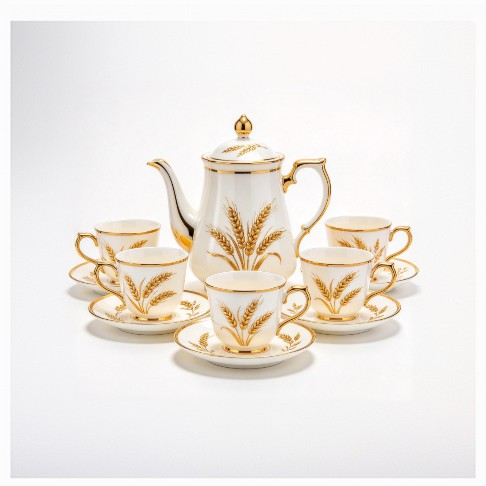
Golden Wheat Tea Set
Elegant golden wheat stalks embellished with 22K gold detailing decorate this four-piece porcelain set. Simple yet luxurious, it adds understated sophistication to breakfast tables and vintage china collections everywhere.
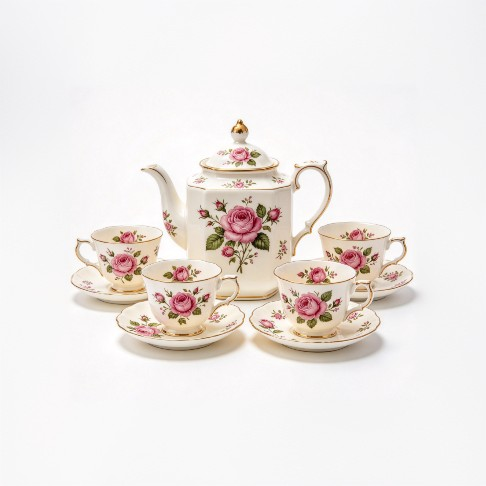
Heritage Rose Tea Set
This heirloom-quality set showcases hand-painted brown floral roses with gold trim on fine porcelain. Includes teapot, creamer, and sugar bowl — a stunning centerpiece for traditional tea service occasions.
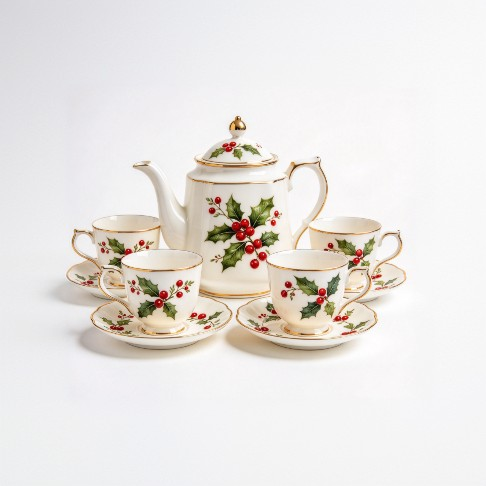
Holly Berry Tea Set
Festive holly leaves and red berries adorn this whimsical 1960s Lefton holiday tea set. Perfect for Christmas gatherings, it blends nostalgic charm with cheerful seasonal porcelain craftsmanship beautifully.
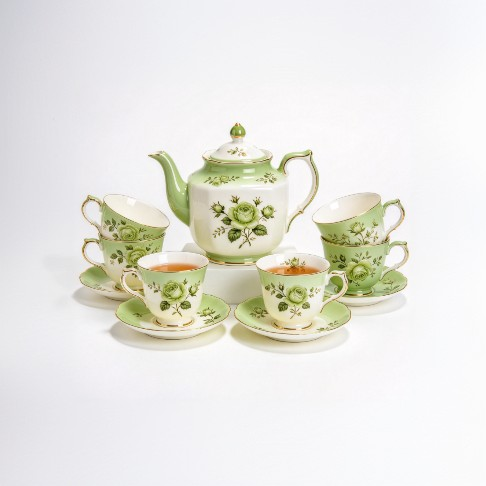
Green Heritage Rose Tea Set
Featuring cabbage rose motifs against soft green backgrounds, this vintage set radiates cottage garden charm. Sold as teapot, cups, and saucers — a beloved staple among Lefton china enthusiasts.
25TH ANNIVERSARY EDITION
Antique Hand Painted Lefton China Vintage 25th Anniversary Vases Tea Set MCM
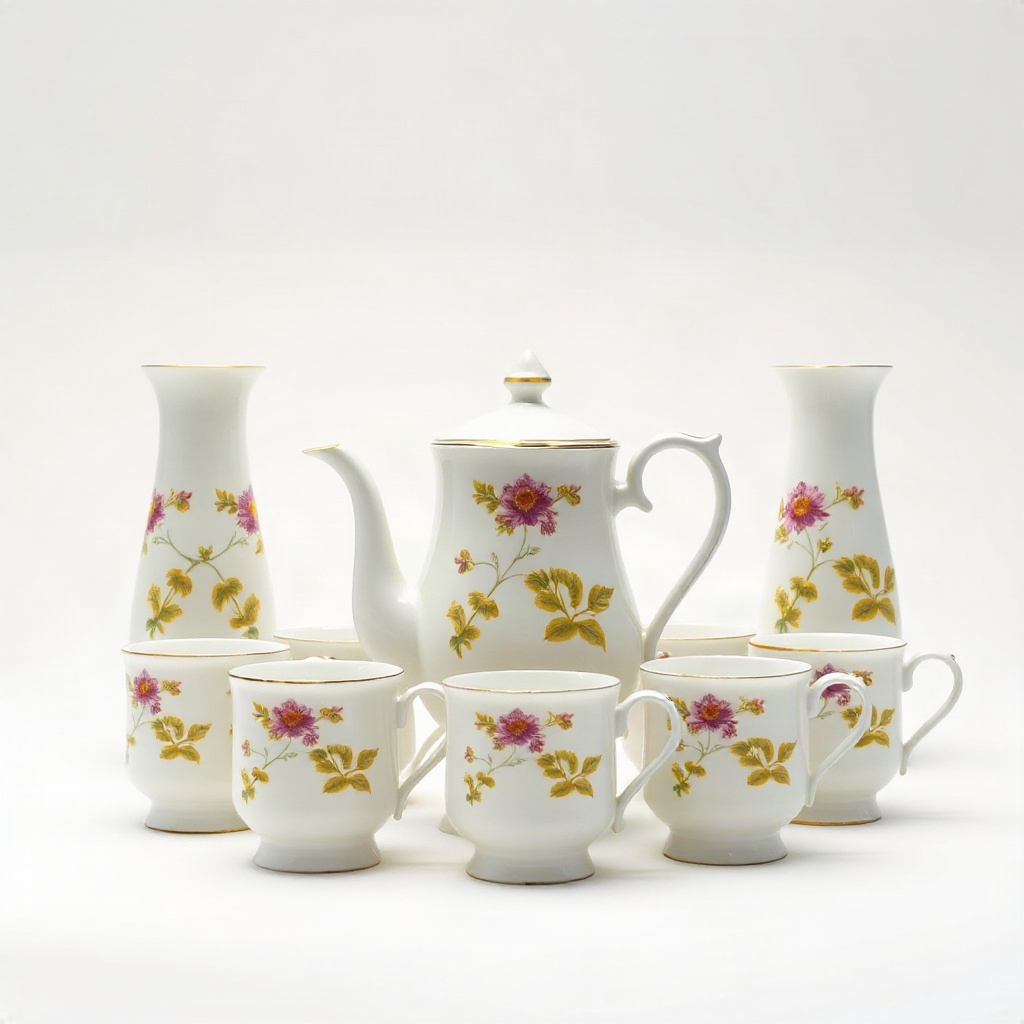
Mark a quarter-century of elegance with this Lefton China 25th Anniversary tea set. It commemorates the milestone with two decorative vases, a covered sugar bowl, a creamer, a cup, and a saucer, all adorned with a silver flowery design. Perfect for collectors seeking a complete anniversary piece.
- Complete set with six pieces: 2 vases, covered sugar bowl, creamer, cup, and saucer.
- Elegant silver flowery design enhances its vintage appeal.
- Each piece is marked with "Royal Albert Bone China England" for authenticity.
- Vases measure 6.5 inches in height, ideal for display.
- Includes a creamer and sugar bowl with lid for functional use.
VINTAGE QUALITY INSPECTION GUIDE
Condition Assessment for Lefton China Tea Sets
Navigating the vintage market for Lefton tea sets requires a keen eye for condition. This guide provides a comprehensive checklist to help you evaluate each piece’s state, from the gilt detailing to structural integrity. Understanding these factors ensures you invest in a set that meets your expectations for display or use.
Examine the gilt edges closely. In vintage Lefton sets, gilt often shows 80% intact coverage with some dullness. Look for consistent application without flaking or bare spots, as this affects both beauty and value. High gilt integrity is a positive sign of minimal use and careful ownership over decades.
Check all surfaces for chips, especially on rims, handles, and bases. Chips can compromise structural integrity and are often permanent. No chips indicate the piece has been well-cared for, which is crucial for both display and functional use. Even small chips can reduce collector appeal and usability.
Inspect for hairline or larger cracks, tapping gently if possible. Cracks can lead to breakage and may not be repairable. Ensure there are no cracks to avoid future issues, making the set safer and more durable. Cracks often start small but can spread with temperature changes or handling.
Look under light for surface scratches. Minor wear is expected, but deep scratches that expose the clay or damage the pattern reduce appeal. Scratches should not interfere with the hand-painted designs or glaze integrity. Use a magnifying glass for detailed inspection on curved surfaces.
Assess the vibrancy and completeness of the hand-painted patterns. Fading or wear can occur from cleaning or use. Strong pattern fidelity adds to the collectible value and enhances visual impact, so prefer sets with clear, unworn designs. Pattern integrity is key for aesthetic enjoyment and historical accuracy.
Test the stability by holding and examining joints. Handles should not wobble, lids must fit securely, and bases should be level. Structural flaws like loose handles or ill-fitting lids indicate poor condition or previous repairs. Ensure all pieces function as intended for their intended use.
COLLECTOR SATISFACTION DATA
What Collectors Actually Report About Lefton China Tea Sets
“Lefton tea sets satisfy collectors seeking well-preserved vintage porcelain with strong visual appeal, though completing a full matching set requires patience and persistence across multiple sources.”
★ Highlights
- Consistently rated 5 stars by tea cup and saucer buyers who inspect condition firsthand
- Good vintage condition verified across multiple sellers-no chips, no cracks, no scratches
- Gilt edges remain 80% intact on many pieces despite decades of age
- Bone china construction feels substantial without being heavy for daily use
⚠ What to watch
- Matching discontinued pieces to form a complete set requires patience and multiple seller searches
- Some listings note cosmetic wear typical of used vintage porcelain-gilt dulling over time
WHY COLLECTORS TRUST LEFTON CHINA
Japanese Ceramic Heritage You Can Count On
Every Lefton piece carries the mark of Japan’s centuries-old ceramic tradition. Here’s what gives collectors confidence in these vintage treasures.
Brand Founded
Years of Production History
Bone Ash Content
Star Collector Rating
Lefton China Care and Maintenance Questions
01
Can I put my Lefton china tea set in the dishwasher?
Hand washing is strongly recommended for all Lefton china pieces. The delicate bone china and gilt edges-found on footed cups and pedestal saucers-are susceptible to fading and wear in a dishwasher. Use lukewarm water, a mild dish soap, and a soft sponge. Avoid abrasive scrubbers that can scratch the hand-painted surfaces or dull gold rims.
02
What are the typical dimensions of Lefton tea set pieces?
Dimensions vary by pattern and piece. A standard teacup measures approximately 4.5 inches in diameter by 3 inches high, while its matching saucer is about 5.5 inches across. Creamers run 4 inches in diameter by 4 inches tall. Sugar bowls with lids reach 5 inches in diameter by 4.5 inches high. Decorative vases in anniversary sets measure roughly 2 inches in diameter by 6.5 inches high. Always confirm measurements…
03
Is Lefton china safe to use in the microwave?
No. Lefton china pieces-particularly those with gilt edges, gold-dipped footings, or metallic painted accents-should never be used in a microwave. The metallic elements can spark and cause damage to both the china and the appliance. Lefton sets are best reserved for serving cold or room-temperature beverages, or for display purposes.
04
How should I store my Lefton china to prevent damage?
Stack saucers with felt or soft cloth dividers between them to avoid surface scratches. Cups should rest upright on their saucers rather than nested. Keep sugar bowl lids separate to prevent chipping at the rim. Store the entire set in a cabinet away from high-traffic areas where vibrations or accidental bumps could cause cracks. Acid-free tissue paper provides an extra layer of protection for gilt-edged pieces.
05
What is the expected lifespan of a Lefton bone china tea set?
With proper hand washing and careful storage, Lefton bone china can last several decades-many sets from the 1950s and 1960s remain in excellent condition today. The primary wear points are gilt edges, which may lose luster over time even with gentle handling. Bone china is thinner and more translucent than standard porcelain, which contributes to its beauty but also makes it more prone to chipping if dropped.
06
How can I remove tea stains from vintage Lefton china?
Create a paste using baking soda and a few drops of water. Gently apply it to the stained interior of a teacup using a soft cloth, then rinse thoroughly. For stubborn stains, soak the piece in a solution of warm water and a tablespoon of white vinegar for 15 minutes before wiping clean. Never use bleach or harsh chemical cleaners, as these can damage the hand-painted decoration and weaken gilt accents over time.
07
Are replacement pieces available for discontinued Lefton patterns?
Many Lefton patterns, including Violet Chintz and other mid-century designs, are officially discontinued. Replacement pieces can sometimes be found through specialty retailers like Replacements, Ltd., which maintains inventories of retired china patterns. Individual saucers typically range from $14 to $40, while cup-and-saucer sets may run $40 to $54 depending on the pattern and condition. Availability is limited…
08
What should I check for wear before using a vintage Lefton set?
Inspect each piece for hairline cracks by holding it up to a light source-cracks appear as thin dark lines. Run a finger along gilt edges to check for roughness or flaking, as loose gold can leach into beverages. Look for chips on the rim of cups and the foot ring of saucers. Minor cosmetic wear on decorative elements is common in vintage sets and does not affect functionality, but compromised structural…